This guide contains affiliate links. As an Amazon Associate we earn from qualifying purchases, at no extra cost to you.
Updated
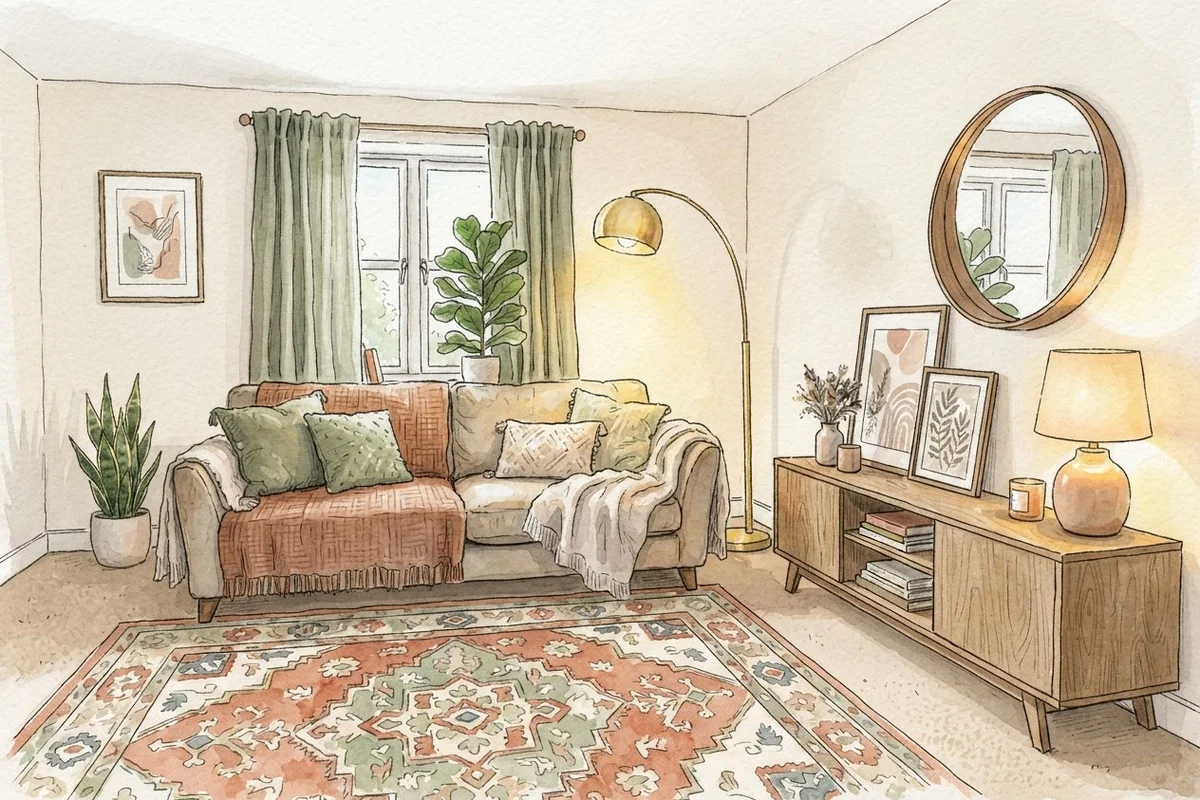
The best renter-friendly decorating ideas add colour, light and personality without changing anything permanent: rugs, curtains, lamps, cushions, plants, leaning mirrors and art hung with removable strips. Done well, these make a rented house or flat feel like home for a few hundred pounds at most, and everything comes with you when you move. Anything that does change the property, such as painting a wall, needs your landlord’s written permission first.
Below are 20 cheap, removable ideas, what to check in your tenancy agreement, and how to protect your deposit.
In this guide
At a glance
| Idea | Rough cost | Removable? |
|---|---|---|
| Large rug over tired carpet | £40 to £120 | Yes |
| Lamps instead of the ceiling light | £20 to £60 | Yes |
| Curtains on a tension rod or existing pole | £20 to £60 | Yes |
| Art hung with removable strips | £10 to £30 | Yes, if used correctly |
| Leaning floor mirror | £40 to £90 | Yes |
| Swap cupboard handles (keep the originals) | £20 to £50 | Yes |
Costs are rough 2026 UK ranges.
Before you start: check your tenancy agreement
Most tenancy agreements say you can’t make alterations, which usually includes painting, drilling, wallpapering and changing fixtures, without the landlord’s consent. Before you begin:
- Read the alterations and decoration clauses. Some agreements allow small picture hooks; others don’t.
- Ask in writing. If you’d like to paint or put up shelves, email your landlord or letting agent with exactly what you want to do. Many will agree, especially if you offer to use a neutral colour or return the wall to its original state.
- Keep the inventory and take photos. Photograph walls, floors and fixtures before you change anything so you can show the condition at check-in.
- Store originals safely. If you swap handles, light shades or blinds, label the originals and keep them to refit before you leave.
Floors: cover what you can’t change
1. Lay a large rug
A big rug hides a tired or patterned carpet, adds warmth and defines the seating area. Go bigger than you think: ideally the front legs of the sofa and chairs sit on it.
Cost: roughly £40 to £120.
2. Use a rug pad on hard floors
A non-slip underlay stops rugs creeping and protects the floor underneath, which helps with the deposit.
Cost: roughly £10 to £25.
3. Add felt pads to furniture legs
Cheap felt pads stop scuffs and dents on wooden or laminate floors.
Cost: roughly £5.
Walls without paint
4. Hang art with removable strips
Picture-hanging strips hold light frames without nails. Follow the weight limit and the instructions exactly (clean the wall, press firmly, wait before hanging), and remove them by pulling the tab straight down slowly.
Cost: roughly £10 to £20 for a pack.
5. Lean, don’t hang
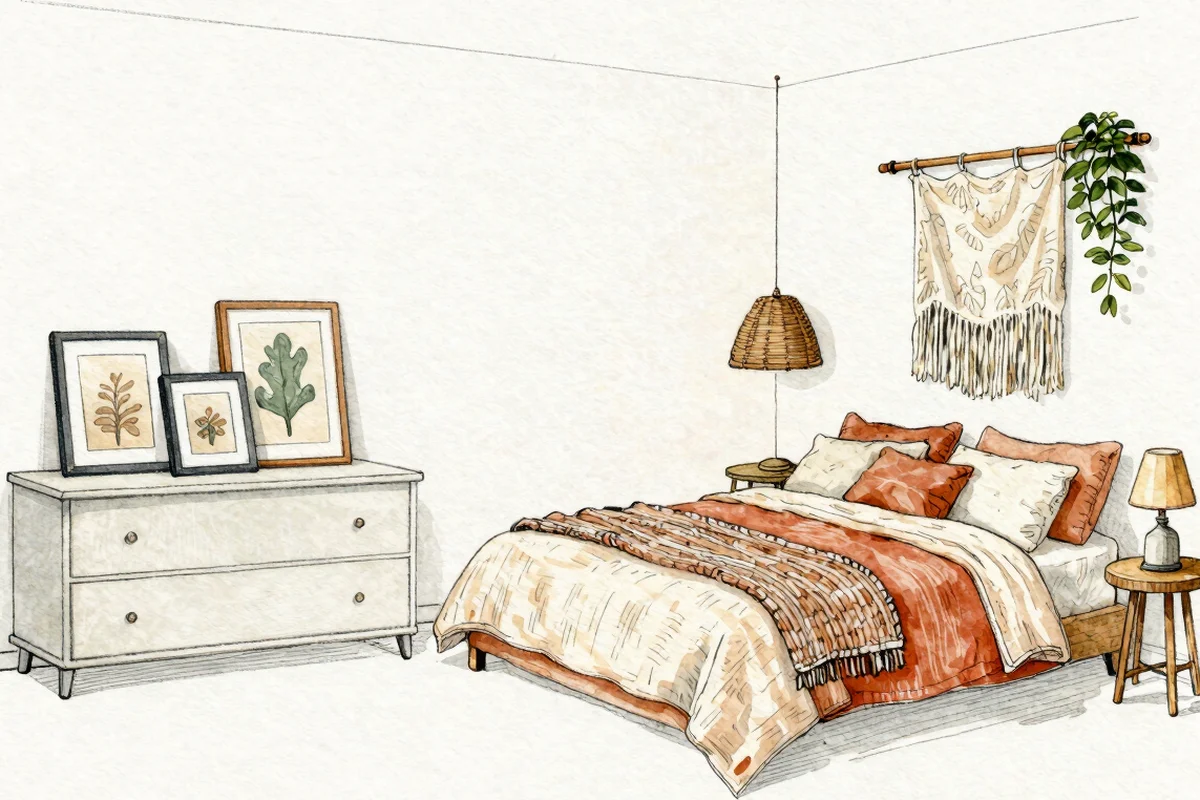
A wide shelf, a sideboard or the top of a chest of drawers is perfect for leaning a few frames in layers. Change them whenever you like with no holes at all.
Cost: free if you already have the furniture.
6. Lean a large floor mirror
A big mirror bounces light and makes a room feel larger. Leaning it against the wall avoids drilling; secure it if you have children or pets.
Cost: roughly £40 to £90.
7. Try removable wallpaper (with permission)
Peel-and-stick wallpaper can transform a feature wall or the back of a bookcase. It can still lift paint on removal, so test a small patch and check with your landlord first.
Cost: roughly £20 to £40 per roll.
8. Use a fabric wall hanging or tapestry
A textile hanging on a lightweight rod adds colour and softness and can be hung on removable hooks.
Cost: roughly £15 to £40.
Lighting: the fastest mood change
9. Switch off the big light
Two or three lamps at different heights (a floor lamp, a table lamp and a small accent light) make a room feel far cosier than a single ceiling light. Our guide to making a small living room feel bigger on a budget has more on layering light.
Cost: roughly £20 to £60 per lamp.
10. Change the lampshade (keep the old one)
Swapping a bare bulb or a dated shade for a fabric or rattan shade is a two-minute job. Keep the original to put back when you leave.
Cost: roughly £10 to £30.
11. Plug-in wall lights
Plug-in wall lights with a cord cover give the look of wired lights. Check whether they need screws; if so, ask your landlord or choose ones that sit on a shelf.
Cost: roughly £25 to £50.
12. Warm-white bulbs everywhere
Many rentals come with cold, bluish bulbs. Swapping to warm white (around 2700K) instantly makes rooms feel more homely.
Cost: roughly £3 to £6 per bulb.
Soft furnishings: colour you can take with you
13. Curtains on a tension rod or the existing pole
Full-length curtains hung as high as possible make windows and ceilings look bigger. In alcoves and small windows, tension rods need no drilling.
Cost: roughly £20 to £60.
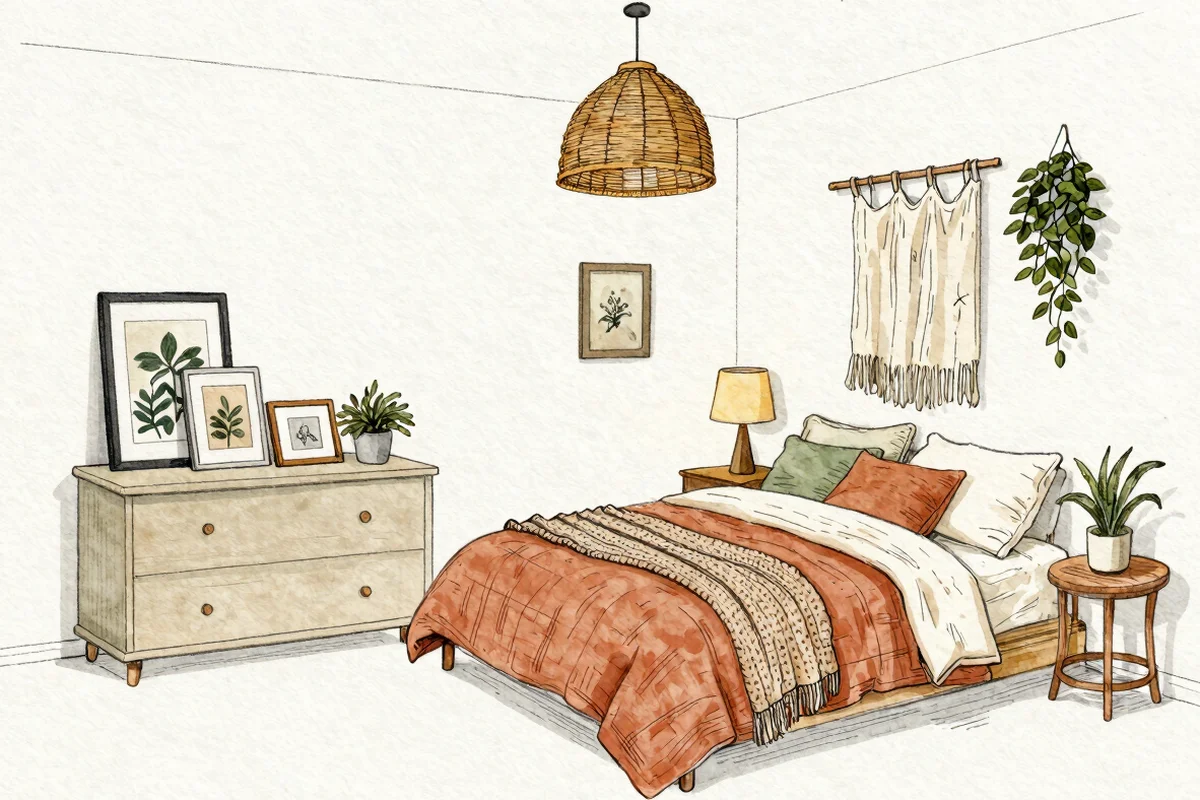
14. Cushions and throws in your colour scheme
Choose two or three colours and repeat them in cushions, throws and accessories. It ties a mismatched rental together. Our guide on how to choose a colour scheme helps you pick.
Cost: roughly £20 to £50 for a set.
15. A sofa cover for a landlord’s sofa
A stretch cover or a large throw hides a dated or worn sofa you’re not allowed to replace.
Cost: roughly £25 to £60.
16. Bedding as the centrepiece
In a bedroom you can’t paint, bedding does the heavy lifting. A textured duvet cover and a couple of cushions change the feel of the whole room. More ideas in our small bedroom ideas on a budget.
Cost: roughly £25 to £50.
Small swaps with big impact
17. Swap cupboard handles (and keep the originals)
New handles update a dated kitchen or wardrobe in an hour. Label the originals and their screws in a bag so you can refit them when you move out.
Cost: roughly £20 to £50.
18. Plants, real or faux
Plants soften hard corners and make any room feel lived in. Choose easy, low-light plants such as pothos, snake plants or ZZ plants if you’re not green-fingered.
Cost: roughly £5 to £25 each.
19. Freestanding shelving
A freestanding bookcase or ladder shelf adds storage and display space with no wall fixings. Anchor tall units with a single fixing only if your landlord agrees, especially with young children around.
Cost: roughly £30 to £80.
20. Smell and sound
A diffuser or candles (used safely), a doormat and soft furnishings that absorb echo all make a rented home feel more like yours. These details are cheap and easy to take with you.
Cost: roughly £10 to £25.
How to protect your deposit
- Photograph every room before decorating and when you move out.
- Remove strips, hooks and stickers slowly and exactly as the packet says.
- Refit original handles, shades and blinds.
- Fill any small holes you were allowed to make, if your agreement asks you to.
- Clean thoroughly, especially behind furniture you’ve moved.
Across the UK, most private tenancy deposits must be protected in a government-approved scheme, which offers free dispute resolution if you disagree with a deduction.
FAQ
Can I decorate a rented house in the UK?
You can usually make changes that don’t alter the property, such as rugs, lamps, cushions and freestanding furniture. Painting, wallpapering or drilling normally needs your landlord’s permission, so check your tenancy agreement and ask in writing.
How can I make a rented house feel like home?
Add a large rug, switch to lamps and warm bulbs, hang curtains high, bring in cushions and throws in a consistent colour scheme, and display your own art and plants. These changes are cheap and all come with you when you move.
Do removable hooks damage walls?
They can if used wrongly. Follow the weight limits, apply them to clean, dry, sound paint, and remove them by pulling the tab slowly straight down along the wall. Test on a hidden area if you’re unsure about the paint.
Can I paint my rented flat if I paint it back?
Only with your landlord’s consent. Many landlords agree, especially to neutral colours, but get it in writing before you start.
Leave a Reply