This guide contains affiliate links. As an Amazon Associate we earn from qualifying purchases, at no extra cost to you.
Updated
A January declutter challenge works best when it’s small: one area, about 15 minutes, every day for 31 days. By the end of the month you’ll have been through the whole home without losing a weekend to it, and you’ll probably have some money back from selling things you no longer use. Below is a day-by-day January declutter list you can print, plus simple rules for deciding what goes and where to take it in the UK.
Decluttering is also the cheapest home makeover there is. A clear surface, an empty corner or a tidy shelf makes a room look bigger and calmer before you spend a penny on decor.
In this guide
How the January declutter challenge works
- One task a day. Each day has a single, small area. Set a timer for 15 minutes and stop when it goes off, even if you’re on a roll.
- Three boxes or bags. Label them keep elsewhere, donate or sell, and bin or recycle. Everything you pick up goes into one of them or back where it lives.
- Out of the house within a week. Donations sitting in the hall are just clutter in a different place. Book a collection or put the bag in the car boot the same day.
- Weekends are for catching up. If you miss a day, don’t double up on Monday. Use Saturday or Sunday to catch up, or simply skip it.
The quick decision rules
- Have I used it in the last year? If not, and it isn’t seasonal or sentimental, it can probably go.
- Would I buy it again today? If the answer is no, you don’t need to keep it.
- Do I have duplicates? Keep the best one or two and let the rest go.
- Is it broken? Fix it this month or let it go. A “to mend” pile that never gets mended is clutter.
- Sentimental things last. They take the most energy, so they come at the end of the month, once you’ve had practice.
Your 31-day January declutter checklist
Print this page or copy the list into your notes app, and tick off each day as you go.
| Day | Area | What to clear |
|---|---|---|
| 1 | Kitchen | Mugs, cups and water bottles |
| 2 | Kitchen | Plastic tubs: match lids, recycle orphans |
| 3 | Kitchen | Food cupboard: out-of-date food and duplicates |
| 4 | Kitchen | Utensil drawer and gadgets you never use |
| 5 | Kitchen | Under the sink: cleaning products and old cloths |
| 6 | Kitchen | Worktops: clear everything you don’t use daily |
| 7 | Catch-up | Take donations out and catch up on any missed day |
| 8 | Bathroom | Old toiletries, samples and half-used products |
| 9 | Bathroom | Medicines: return out-of-date ones to a pharmacy |
| 10 | Bathroom | Towels and bedding: keep two sets per bed |
| 11 | Bedroom | Bedside tables and under the bed |
| 12 | Bedroom | Tops and jumpers |
| 13 | Bedroom | Trousers, jeans and skirts |
| 14 | Catch-up | List things to sell and book any collections |
| 15 | Bedroom | Shoes, bags and coats |
| 16 | Bedroom | Socks, underwear and nightwear |
| 17 | Living room | Coffee table, shelves and surfaces |
| 18 | Living room | DVDs, games and old chargers |
| 19 | Living room | Books: keep the ones you’d reread or lend |
| 20 | Living room | Cushions, throws and decor you don’t love |
| 21 | Catch-up | Take donations out and catch up |
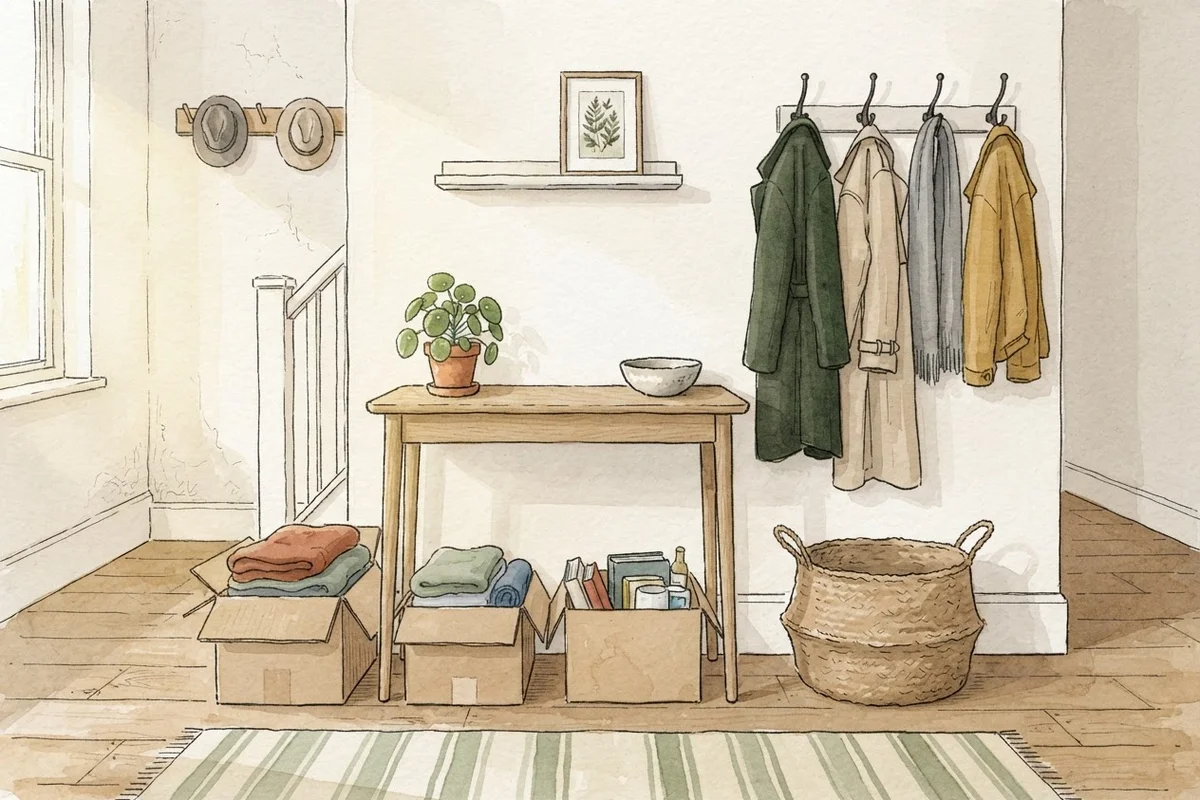
| 22 | Hallway | Shoes, coats and the “dumping” surface |
| 23 | Paperwork | Post, receipts and old manuals (shred anything personal) |
| 24 | Kids’ rooms | Outgrown toys and clothes (involve the kids) |
| 25 | Under the stairs | Bags for life, cleaning kit and odds and ends |
| 26 | Digital | Phone photos, email inbox and old apps |
| 27 | Garage, loft or shed | Just one shelf or one box |
| 28 | Catch-up | Last donations out, list the final items to sell |
| 29 | Sentimental | Cards and keepsakes: keep the best in one box |
| 30 | Sentimental | Photos: choose favourites to frame or put in an album |
| 31 | Whole home | Walk round, put back strays and enjoy the space |
How to declutter each room without stress
Kitchen
Start here because it’s the easiest win: there’s lots of obvious duplication (mugs, tubs, utensils) and you’ll use the space every day. Clearing worktops on day 6 makes a small kitchen look far bigger, and a calm, simple colour scheme finishes the job (see how to choose a colour scheme).
Bedroom and wardrobe
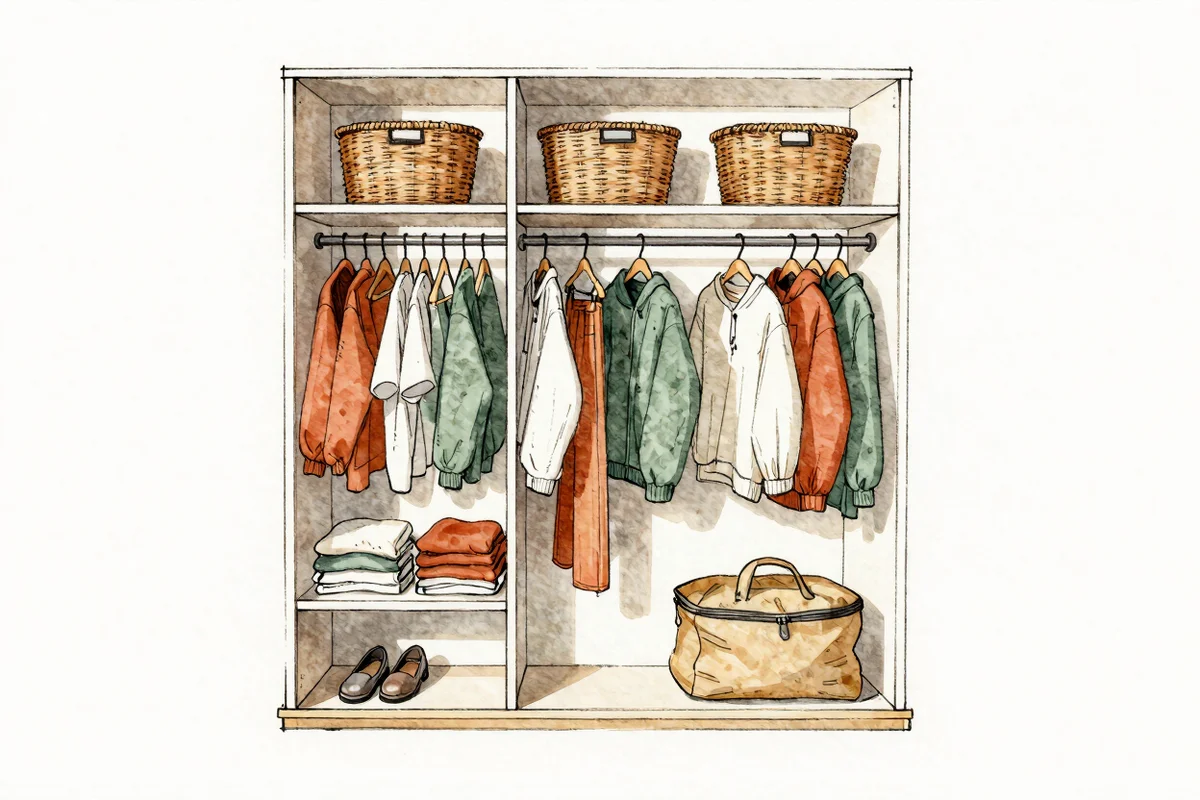
Turn all your hangers the “wrong” way round on day 12. When you wear something, hang it back the normal way. By next January, anything still the wrong way round hasn’t been worn all year. For ideas on making the space feel bigger once it’s clear, see our small bedroom ideas on a budget.
Living room
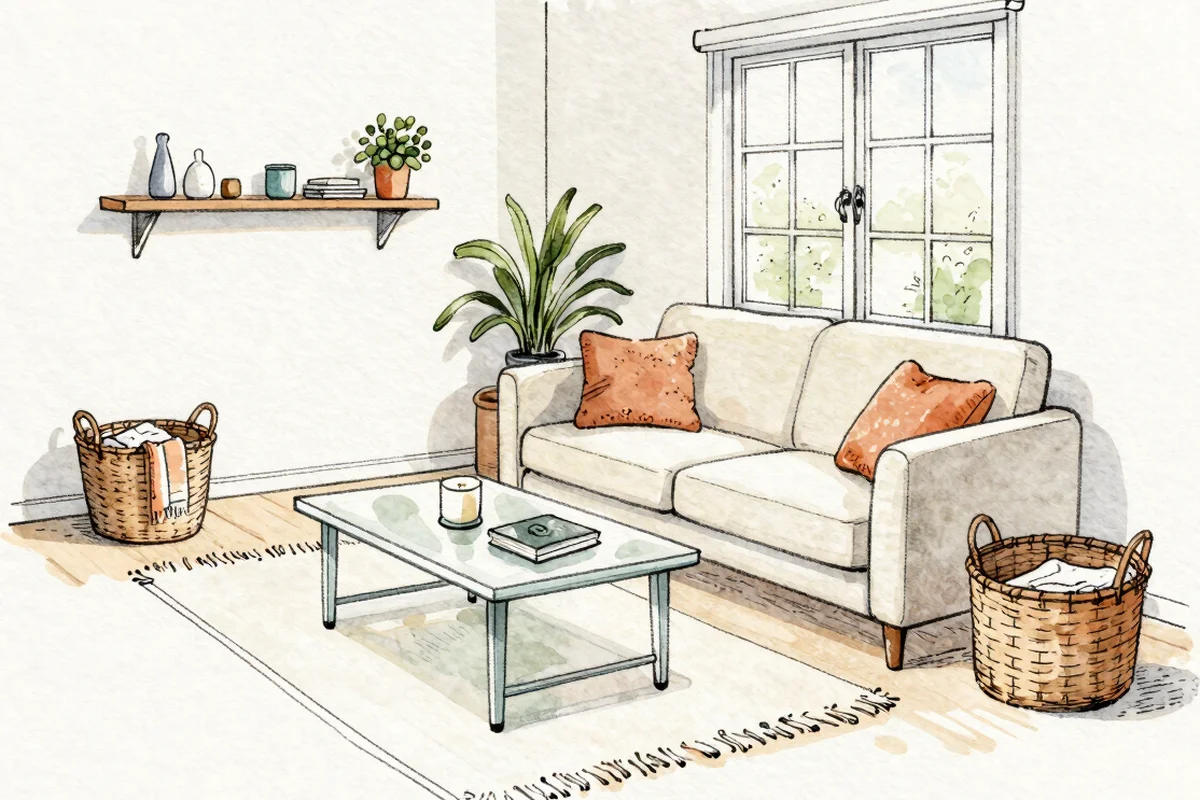
Aim for clear surfaces: no more than three things on the coffee table and the same on each shelf. Group the rest by colour or height, or put it away. It’s an instant upgrade, and pairs well with our small living room makeover on a budget.
Kids’ rooms
Let children choose what to pass on, and give each a “one in, one out” rule for toys after Christmas. Many charity shops take toys in good condition with all their pieces.
Where to sell, donate or recycle in the UK
| Item | Best option |
|---|---|
| Clothes, shoes, bags | Sell on Vinted or eBay, or donate to a charity shop |
| Books, DVDs, games | Sell via Ziffit or Music Magpie (scan the barcode for a quote), or donate |
| Furniture in good condition | British Heart Foundation or local furniture charities often collect free; list on Facebook Marketplace |
| Things that still work but won’t sell | Give away on Freecycle, Freegle or Olio |
| Small electricals and cables | Many large electrical shops take old electricals for recycling; check your council’s tip too |
| Out-of-date medicines | Take them back to a pharmacy; don’t put them in the bin |
| Personal paperwork | Shred it before recycling |
| Broken or worn-out items | Your council’s household waste recycling centre |
Check your local charity shop’s rules before you drop off. Many can’t take electricals without a safety test, and they can’t sell things that are broken, stained or missing pieces.
Cheap storage that helps (only after decluttering)
Don’t buy storage first: you’ll just organise things you don’t need. Once you’re done, these small buys keep it tidy.
Drawer dividers
Stop the kitchen utensil drawer and sock drawer turning back into a jumble.
Cost: roughly £8 to £15.
Under-bed storage bags
Soft zip-up bags keep spare bedding and out-of-season clothes dust-free.
Cost: roughly £10 to £20 for a set.
Matching baskets
One style of basket across a shelf looks calm and hides the bits that don’t need to be on show.
Cost: roughly £15 to £30 for a set of three.
Slim velvet hangers
Matching slim hangers take up less rail space and stop clothes slipping off.
Cost: roughly £10 to £20 for a pack.
FAQs
What is the January declutter challenge?
It’s a month-long challenge to declutter your home a little at a time, usually one small area or task a day for 31 days, starting on 1 January.
How long should I declutter each day?
About 15 minutes is enough. Short daily sessions stop you getting tired and making rushed decisions, and they’re easier to stick to all month.
Where should I start decluttering?
Start somewhere easy with lots of obvious duplicates, such as the kitchen or bathroom. Leave sentimental items and big storage areas such as the loft until you’ve built up momentum.
What should I get rid of first when decluttering?
Start with things that are broken, out of date, duplicated or that you haven’t used in a year. They’re the easiest decisions and clear space fast.
Can I make money from decluttering?
Yes. Clothes sell well on Vinted, books, DVDs and games can go to Ziffit or Music Magpie, and furniture and larger items can go on Facebook Marketplace or eBay.
Leave a Reply