This guide contains affiliate links. As an Amazon Associate we earn from qualifying purchases, at no extra cost to you.
Updated
To stop condensation on windows, you need to do two things: put less moisture into the air, and let the damp air out. Condensation forms when warm, moist air from breathing, cooking, showers and drying washing hits cold glass and turns back into water. Most homes can cut it right down for little or nothing by opening trickle vents, using extractor fans, keeping lids on pans, drying washing outside or in a well-ventilated room, and wiping the windows each morning. If that isn’t enough, a dehumidifier is the most effective cheap buy.
Below are 12 fixes in the order we’d try them, with rough UK costs, plus how to tell when it’s more than everyday condensation.
In this guide
At a glance: what to try first
| Fix | Rough cost | How much it helps |
|---|---|---|
| Open trickle vents and air rooms for 10 minutes a day | Free | High |
| Use extractor fans and lids on pans | Free | High |
| Dry washing outside or in a ventilated room | Free | High |
| Wipe or squeegee windows every morning | Free | Medium |
| Window vac | £25 to £60 | Medium |
| Hygrometer to check humidity | £5 to £15 | Helps you target fixes |
| Moisture traps | £5 to £15 | Low |
| Dehumidifier | £100 to £250 | Very high |
Costs are rough 2026 UK ranges and will vary by brand and shop.
Why windows get condensation
Warm air holds more water than cold air. When the air in your home touches something cold, like a window on a winter morning, it cools down and drops that water on the glass. It’s usually worst:
- On bedroom windows in the morning, because two people breathing all night add a surprising amount of moisture to a closed room.
- In kitchens and bathrooms, after cooking or a shower.
- In cold rooms, or rooms where heating goes on and off.
- On single glazing, old double glazing and metal frames, which have colder surfaces.
So the fixes fall into three groups: make less moisture, let moisture out, and keep surfaces a little warmer.
Free fixes that make the biggest difference
1. Open trickle vents and keep them open
Most modern windows have a slim vent at the top of the frame. Slide it open and leave it open, especially in bedrooms. It lets moist air out slowly without making the room feel cold.
Cost: free.
2. Air each room for 10 minutes a day
Open the windows wide for about ten minutes in the morning, ideally across the house so air flows through. A short, wide opening swaps damp air for drier air faster than leaving a window on the latch all day, and loses less heat.
Cost: free.
3. Use extractor fans properly
Turn the bathroom fan on before your shower and leave it running for 15 to 20 minutes afterwards. Use the cooker hood whenever you cook, and keep the door shut so steam doesn’t spread through the house.
Cost: free (a quiet replacement fan is a job for an electrician).
4. Put lids on pans
It sounds tiny, but boiling pans without lids put a lot of water into the air. Lids also make cooking faster and cheaper.
Cost: free.
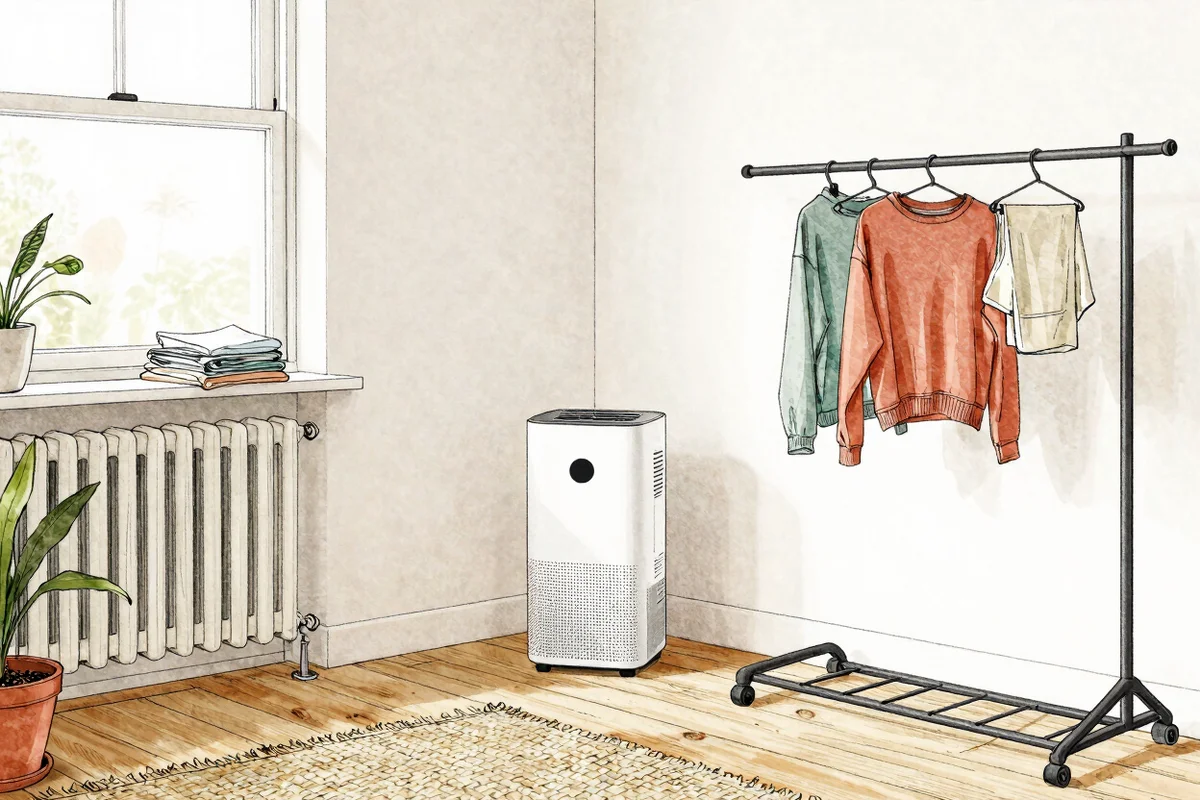
5. Dry washing outside or in one ventilated room
Drying clothes on radiators is one of the biggest causes of window condensation in winter. Dry outside when you can. Otherwise, use one room with the door shut and the window or trickle vent open, or put a dehumidifier next to the airer.
Cost: free.
6. Wipe windows first thing
Wipe or squeegee the glass and the sill each morning before the water soaks into the frames and sealant. Wring the cloth out in the sink rather than letting it dry on the radiator.
Cost: free.
7. Keep heating low and steady
Rooms that are heated hard for an hour and then left cold get more condensation than rooms kept at a lower, steady temperature. If you can, keep unused rooms from getting icy cold and leave their doors closed. Our small bedroom ideas on a budget has more cheap ways to make a bedroom comfortable.
Cost: free to adjust.
8. Pull furniture away from outside walls
Leave a gap of a few centimetres between big wardrobes or sofas and cold outside walls, so air can move behind them. Keep the curtains open during the day.
Cost: free.
Cheap buys that help
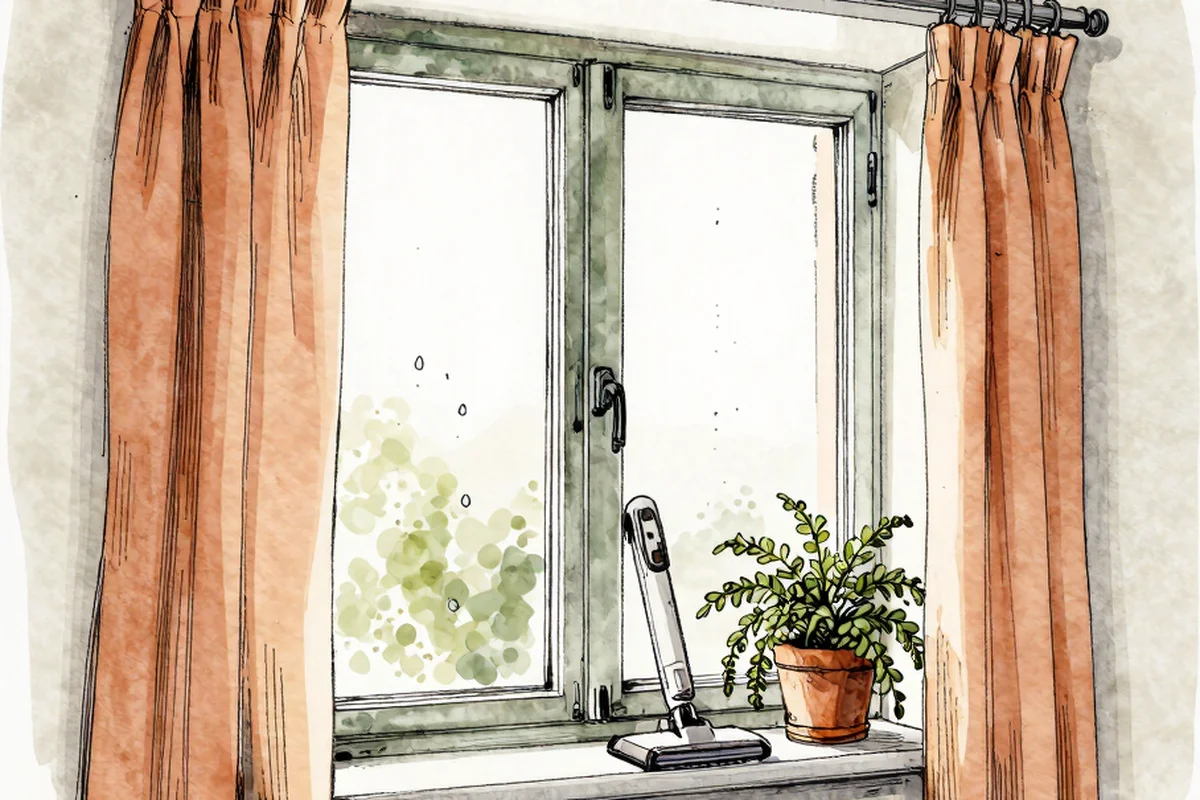
9. A window vac
A rechargeable window vac sucks the water off the glass in seconds and collects it in a small tank, so it goes down the sink rather than into the air. It’s quicker than a cloth if you have lots of windows.
Cost: roughly £25 to £60.
10. A hygrometer
A small digital thermometer and humidity meter tells you whether a room is genuinely damp. Indoor humidity of about 40 to 60% is usually comfortable. If a bedroom sits much higher than that most mornings, ventilation or a dehumidifier will help.
Cost: roughly £5 to £15.
11. Moisture traps (with realistic expectations)
Moisture traps with absorbent crystals are cheap and fine for a cupboard, a wardrobe or a small window ledge. They won’t dry a whole room, though, so treat them as a top-up, not the main fix.
Cost: roughly £5 to £15 plus refills.
12. A dehumidifier
If you dry washing indoors or your windows stream every morning, a dehumidifier is the single most effective buy. Desiccant dehumidifiers usually work better in cold rooms and unheated spaces, while compressor models suit warmer rooms. Choose one sized for the room, empty the tank daily and run it while washing dries.
Cost: roughly £100 to £250.
Do thermal curtains and window film help?
- Thermal curtains keep a room warmer, but closed curtains trap cold, damp air against the glass overnight, which can make morning condensation worse. Leave a small gap at the top or bottom, and open them first thing.
- Insulating window film kits (a clear film stretched over the frame and shrunk tight with a hairdryer) add a layer of still air, so the inner surface stays warmer. They can help on single glazing and are cheap, but you need to leave trickle vents uncovered.
When it’s more than condensation
A bit of condensation on cold mornings is normal. It’s worth looking further if:
- Water collects between the two panes of double glazing. That means the seal has failed, and the unit needs replacing, not wiping.
- Black spots appear on frames, sealant or walls. Clean them off and fix the cause early, because damp and mould are worth tackling as soon as they appear.
- Damp patches show up on walls even when the windows are dry, which can point to a leak or rising damp.
If you rent, report persistent damp or mould to your landlord in writing. Our renter-friendly decorating ideas covers what you can change yourself.
Once the windows are under control, keeping surfaces clear makes wiping and airing far easier: our January declutter challenge is a simple way to start.
FAQ
How do I stop condensation on my windows overnight?
Leave the trickle vents open, keep the bedroom door open or ajar so air can move, avoid drying washing in the bedroom and open the window wide for ten minutes in the morning. If it’s still bad, run a dehumidifier in the room in the evening.
Why are my bedroom windows wet every morning?
Breathing overnight adds moisture to a closed room, and the glass cools down at night. When the warm, moist air touches the cold window, it turns to water. Ventilation and steady, gentle heating are the main fixes.
Do moisture traps work for condensation?
They help a little in small spaces such as cupboards and windowsills, but they can’t take enough water out of the air to fix a whole room. A dehumidifier is far more effective.
Is it better to use a dehumidifier or open windows?
Both help. Opening windows for a short time each day is free and swaps damp air for drier air. A dehumidifier is better when you dry washing indoors or the weather is cold and wet for days on end.
Is condensation on windows normal?
A little condensation on cold winter mornings is normal, especially in bedrooms and kitchens. Heavy condensation every day, water between double-glazed panes or black mould are signs it needs more attention.
Leave a Reply