This guide contains affiliate links. As an Amazon Associate we earn from qualifying purchases, at no extra cost to you.
Updated
Painting kitchen cupboards is one of the cheapest ways to transform a kitchen: for roughly £60 to £150 in paint, primer and kit, you can make tired doors look new without replacing a single unit. The secret isn’t the paint colour, it’s the preparation. Clean off the grease, scuff the surface, use the right primer for what your doors are made of, then apply thin coats and give them time to harden. Do that and a painted kitchen can last for years.
This beginner’s guide covers whether your cupboards can be painted, what it costs, the paint and primer to use for wood, MDF and laminate, and a step-by-step method. It builds on our beginner’s guide to painting old furniture, with the extra steps a kitchen needs.
In this guide
At a glance
| Question | Short answer |
|---|---|
| Can I paint my kitchen cupboards? | Yes, if they’re solid wood, painted MDF or laminate in good condition |
| Rough cost | £60 to £150 for a small to medium kitchen |
| Time | A long weekend, plus up to two weeks for the paint to fully harden |
| Hardest part | Degreasing and sanding properly |
| Biggest mistake | Skipping the primer on shiny laminate or thick, gloopy coats |
Costs are rough 2026 UK ranges and depend on the size of your kitchen and the products you choose.
Can you paint your kitchen cupboards?
Check what your doors are made of first. Look at the edge of a door and the inside face.
- Solid wood or wood veneer. The easiest to paint. Clean, sand and prime, especially on oak or pine, where knots and tannins can bleed through pale paint.
- Painted or bare MDF. Paints well. Bare MDF edges soak up paint, so prime them first.
- Laminate or melamine. The shiny, wipe-clean finish found on many budget kitchens. You can paint it, but only with a light sand and a bonding primer made for shiny surfaces. Without one, the paint can peel off in strips.
- Vinyl-wrapped (foil) doors. Often found on shaker-style MDF doors with a thin plastic skin. If the wrap is peeling near the oven or kettle, painting won’t fix it, and you may be better off replacing those doors or the whole set with replacement doors.
If you rent, ask your landlord first. Our renter-friendly decorating ideas has changes you can make without permission, such as new handles or a peel-off backsplash.
How much does it cost to paint kitchen cupboards?
| Item | Rough cost |
|---|---|
| Specialist cupboard or furniture paint (one or two tins) | £25 to £70 |
| Bonding primer (for laminate, oak or bare MDF) | £15 to £35 |
| Sugar soap or degreaser | £3 to £8 |
| Sanding sponges or paper (120 and 240 grit) | £5 to £10 |
| Mini foam roller, small synthetic brush, tray | £8 to £15 |
| Decorator’s caulk, filler, masking tape, dust sheets | £8 to £15 |
| New handles (optional) | £20 to £60 |
A professional spray painter usually charges a lot more, so doing it yourself is where the saving is.
Which paint is best for kitchen cupboards?
Use a paint made for cupboards, furniture or woodwork, not ordinary emulsion. Emulsion stays soft and marks easily, which is a problem on doors you touch every day.
- Kitchen cupboard paints. Brands such as Rust-Oleum and Ronseal make paints for kitchen cupboards that are tough, wipeable and easy to use. Several claim to need no primer on some surfaces, but on laminate or glossy doors a bonding primer is still the safer choice.
- Furniture paints. Frenchic and similar furniture paints come in lots of colours and are popular for upcycling. Check the tin says it’s suitable for kitchen cupboards or high-traffic surfaces, and add a topcoat if the brand recommends one.
- Water-based satin or eggshell trim paints. A good option if you want a colour from a big paint brand. Choose a durable, washable finish.
Satin or eggshell finishes are the most forgiving. Gloss shows every brush mark, and very matt finishes can mark more easily near the hob and bin.
Primer: when you need it
- Laminate, melamine and glossy painted doors: always. Use a bonding primer made for shiny surfaces, such as Zinsser Bulls Eye 1-2-3 or a similar “grips to tiles and laminate” primer.
- Oak, pine and knotty wood: a stain-blocking primer stops tannins and knots turning pale paint yellow.
- Bare MDF: prime the edges at least, because they drink paint.
Shop kitchen cupboard paint on Amazon
What you need
- Sugar soap or a kitchen degreaser and cloths
- Sanding sponges in a medium (120) and fine (240) grit
- A mini foam roller and a small synthetic brush for the edges and panel grooves
- Masking tape, dust sheets and a screwdriver
- Filler for dents, and decorator’s caulk for gaps on the cabinet frames
- Primer and paint (see above)
- Freezer bags and a marker to keep each door’s hinges and screws together
Cost: roughly £30 to £50 for the kit before paint.
How to paint kitchen cupboards, step by step
1. Empty, label and remove
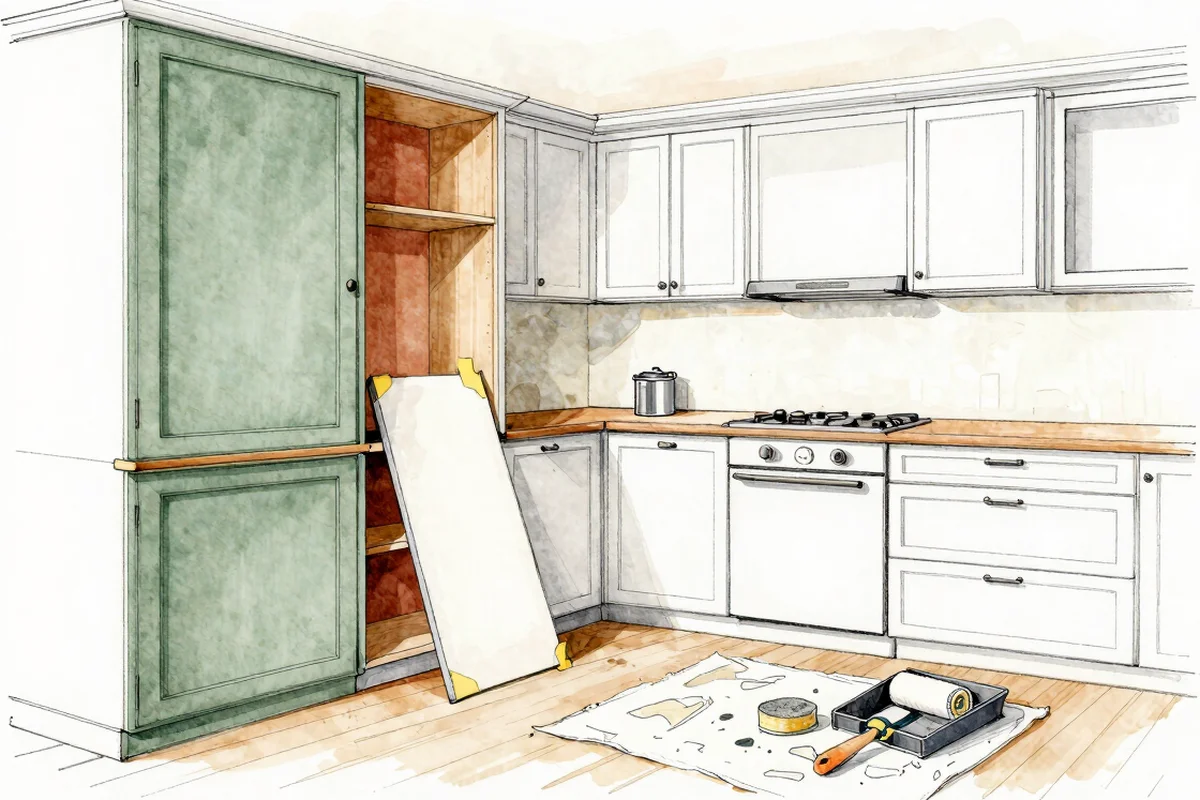
Empty the cupboards, then take off the doors and drawer fronts. Number each door and its matching hinge position with a strip of masking tape inside the hinge hole, and put its hinges and screws in a labelled bag. You’ll thank yourself when it’s time to rehang them. Take off the handles too.
2. Clean properly
This is the step most people rush. Kitchen doors carry a film of grease that stops paint sticking. Wash every surface, including the frames, with sugar soap or a degreaser, rinse with clean water and let it dry. Pay extra attention to doors near the hob and around the handles.
3. Sand (a scuff, not a strip)
Lightly sand every surface with a 120 grit sanding sponge to dull the shine. You’re not taking it back to bare wood, just giving the primer something to grip. Fill any dents, let the filler dry and sand it flush. Vacuum the dust, then wipe with a barely damp cloth.
4. Prime
Apply one thin coat of primer with the foam roller on flat areas and the brush in the grooves and edges. Do the backs of the doors first, let them dry, then turn them over and do the fronts. Leave it to dry for as long as the tin says, then give it a very light sand with 240 grit.
5. Paint in thin coats
Apply two or three thin coats rather than one thick one. Brush paint into grooves first, then roll the flat areas in one direction and lightly “lay off” with an almost dry roller to smooth it. Thick coats run, dry slowly and stay soft. Sand lightly between coats if you see bits or brush marks.
6. Paint the frames
While doors dry, mask off the worktop, walls and floor and paint the cabinet frames and any end panels in the same order: clean, sand, prime, paint. Run a thin line of caulk along any gaps first for a crisp, fitted look.
7. Let it harden before rehanging
Paint can feel dry within hours but take much longer to fully harden, often up to two weeks (check your tin). Rehang the doors once they’re dry enough to handle, but treat them gently for the first fortnight: no scrubbing, and close them carefully.
8. Add new handles
New handles finish the job and cost very little compared with the difference they make. If you’re changing size, choose handles with the same hole spacing as the old ones, or fill and redrill the holes before you prime.
Cost: roughly £20 to £60 for a set.
Painting laminate kitchen cupboards
Laminate is the one surface people worry about most, and it’s where most peeling happens. Follow the same steps as above, with three extra rules:
- Degrease twice. Laminate shows grease badly, so clean it once, rinse, and clean again.
- Sand to a dull, even sheen. A fine sanding sponge is enough. Don’t sand through the laminate layer.
- Always use a bonding primer. Then test it: once dry, press a piece of masking tape onto a hidden area and pull it off. If the primer comes away, clean and prime again before you paint.
Avoid painting laminate doors that are swollen, chipped through to the chipboard, or lifting at the edges. Paint won’t hide that damage for long.
Kitchen cupboard colour ideas
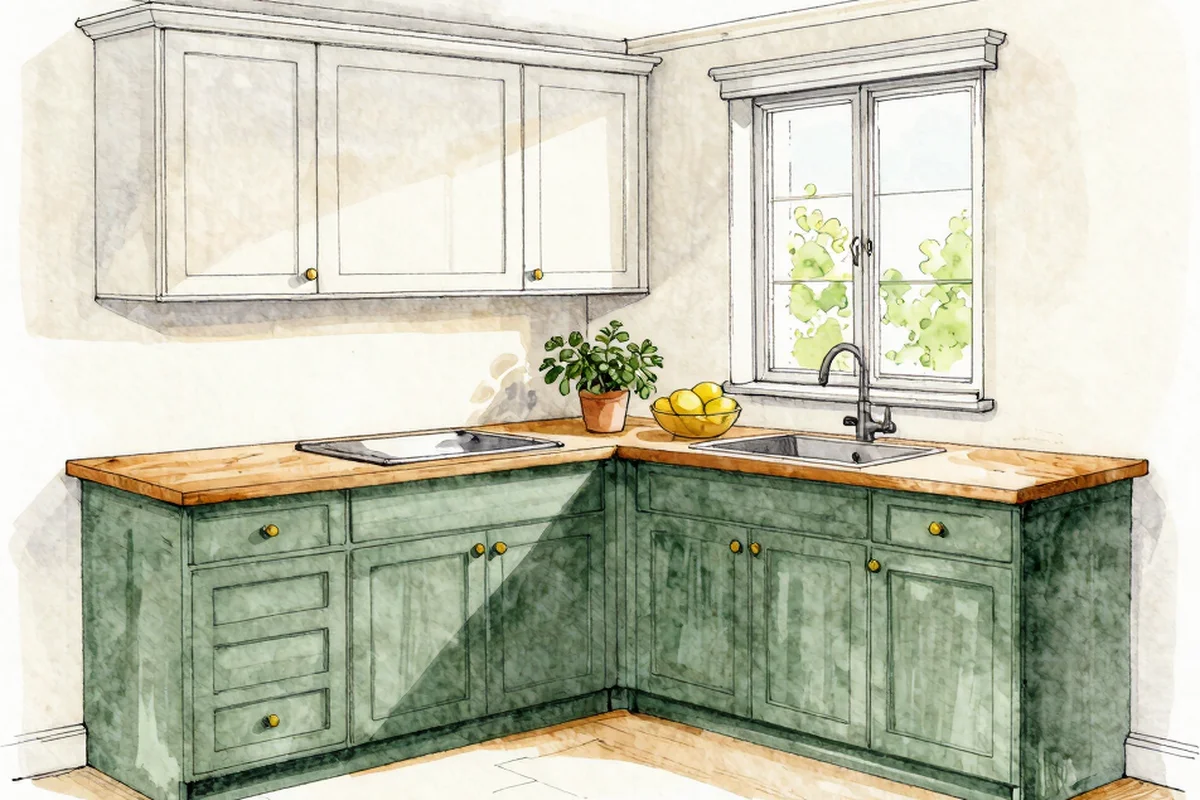
- Two-tone. Darker lower units with lighter wall units keeps a small kitchen feeling tall and bright. Sage, navy and deep green all work well below, with warm white above.
- Warm whites and creams. A safe choice for a small or dark kitchen. Pick one with a little warmth, so it doesn’t look grey under kitchen lights.
- Sage and soft greens. A popular choice that looks good with wood, brass and white tiles.
- Bold colour on an island or one run. If you’re nervous about colour, paint just the island or one wall of units.
For help choosing, see how to choose a colour scheme. Buy tester pots and paint a whole door first: colours look very different in a kitchen with its own lighting.
Common mistakes to avoid
- Skipping the clean. Grease is the number one reason paint peels.
- Painting doors on the hinges. You’ll get drips and miss the edges. Take them off.
- Thick coats. They run, stay tacky and chip. Thin coats always win.
- Using emulsion. It’s cheap, but it’s too soft for cupboard doors.
- Rushing the cure. Rehanging and scrubbing doors after a day or two leads to scuffs and stuck doors.
If you’re planning more updates, our small kitchen ideas on a budget covers lighting, storage and other cheap fixes that work well with freshly painted cupboards.
FAQ
Do you need to sand kitchen cupboards before painting?
Yes, lightly. A quick scuff with a medium sanding sponge dulls the shine so primer and paint can grip. You don’t need to strip them back to bare wood.
Can you paint kitchen cupboards without removing the doors?
You can, but it’s harder to get a smooth finish and easy to paint the hinges or get drips on the edges. Taking the doors off and painting them flat gives a much better result.
What is the best paint for kitchen cupboards in the UK?
A specialist kitchen cupboard or furniture paint in a satin or eggshell finish is best. Ronseal, Rust-Oleum and Frenchic all make paints for cupboards. On laminate or glossy doors, use a bonding primer underneath.
How long does painted kitchen cupboard paint last?
With good preparation, a primer and a durable cupboard paint, painted kitchen cupboards can last for years. Peeling within weeks is almost always caused by grease, no sanding or the wrong primer.
Can you paint laminate kitchen cupboards?
Yes. Clean them thoroughly, sand lightly, and use a bonding primer made for shiny surfaces before you paint. Don’t paint laminate that is chipped through, swollen or lifting.
Leave a Reply